
Your ad here
Reach the executives, lawyers and operators shaping the industry.
Advertise with usCamera, sound, editing, design, makeup, production management, marketing, compliance and distribution: the roles that make productions possible, and the realistic routes into them.
The industry's public face is talent, but its payroll is mostly crew. Every finished production passes through the hands of a camera operator, an editor, a sound recordist, a makeup artist, a production coordinator and someone responsible for getting it online without breaking.
Those roles are hiring, and they are far more accessible than the outside world assumes. The jobs board publishes them regularly, often with rates stated.
The departments, in plain terms
Production: producers, production managers and coordinators who own the schedule, the budget and the paperwork. This is the department that decides whether a set runs calmly.
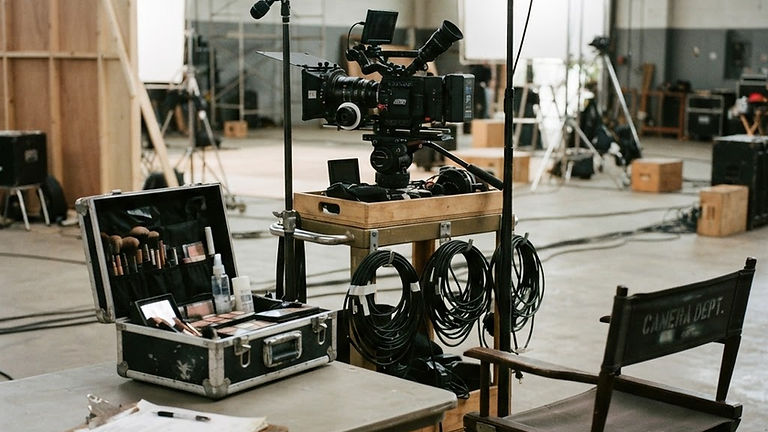
Camera: directors of photography, camera operators, first assistants who manage focus and media, and digital imaging technicians who manage the files. This is where visual quality is decided.
Sound: recordists and post mixers. Frequently the most under-budgeted department, and the one audiences notice most when it fails.
Design: production designers, set dressers, wardrobe and prop stylists. The cheapest way to raise perceived production value.
Makeup and hair: often the difference between a performer looking comfortable and looking uncomfortable on camera, and increasingly responsible for continuity and skin safety across long days.
Post: editors, colourists and sound editors. The department where footage becomes a film, and where many small studios now spend the largest share of their budget.
Business: marketing, compliance, customer support, affiliate management, distribution and platform operations. These roles scale with revenue rather than with shoot days.
Realistic entry routes
The most common entry is adjacent work: wedding and event video, corporate production, music videos, retail photography, social content, or editing for creators. Those environments teach the fundamentals that transfer directly.
The second is apprenticeship. Start as a production assistant, a second camera, an editor's assistant or a set dresser, and learn from people already doing the job. Reputation travels fast in a small industry, and reliability is the attribute most often cited by people who hire.
The third is portfolio-first. A short, well-cut reel of three projects you can discuss in detail beats a long list of credits you cannot. Hiring managers want to know what you did on the project, not just that you were there.
What hiring managers actually look for
Punctuality, communication and discretion. Sets are confidential environments, and crew who talk about what they saw do not get rehired, regardless of skill.
Technical competence at the level being hired for, not above it. Someone applying to assist should be excellent at assisting.
Respect for boundaries and consent practice. Crew who understand check-ins, closed sets and privacy rules make the day easier for everyone, and experienced producers treat that as a core skill rather than a bonus.
Pay, terms and the freelance reality
Crew work is largely freelance, which means day rates, invoices, 1099 income and self-managed tax. Ask about payment timing before you accept, and put the rate, the day length and the deliverable in writing.
Day rates vary enormously by department, city and budget. The useful move is to ask two or three people doing the job in your market what a fair rate looks like, then treat that as a floor rather than an aspiration.


Your ad here
Reach the executives, lawyers and operators shaping the industry.
Advertise with usBuilding a career rather than a gig list
Choose a department and go deep. Generalists are useful on small shoots and rarely get hired on larger ones.
Keep a running document of what you did on each project and who you worked with. In three years that list is your business development plan.
And read the business side: workplace safety rules, copyright basics, and how the productions you work on are actually financed. The crew who understand the money are the crew who become producers.
Breaking in without contacts
Most crew did not know anyone when they started. The routes that work are unglamorous and reliable: answer adverts early, offer to assist for a day, and turn up with the right kit and a notebook.
Production companies hire from a short list of people who have already been vouched for, so the first job is the hardest and every job after it is easier. Expect the first few to be unglamorous: carrying cases, logging footage, running errands, tidying a set.
Build a small portfolio deliberately. Three projects that show range, cut into a two-minute reel, with a one-line description of what you actually did on each. Hire a friend to shoot a testimonial if you have nothing else; evidence of reliability matters more than glamour at this stage.
Ask for feedback after every job, and ask every satisfied producer for one introduction. That single habit compounds faster than any course.
What the job interview is really testing
In a two-minute conversation, producers are assessing three things: can you do the job, will you be discreet, and will the day be easier or harder because you are there.
Prepare for those three questions rather than for a rehearsal of your credits. Be specific about what you have done, be clear about the limits of your experience, and ask what the day looks like and who you report to.
Ask about rates, hours and payment timing directly. Candidates who negotiate clearly tend to be treated as professionals, and the producers who react badly to a simple rate question are telling you something useful before the shoot rather than after it.
Practical takeaways
-
Pick a department and build depth rather than breadth.
-
Enter through adjacent production work, apprenticeship or a tight portfolio reel.
-
Ask about payment timing before accepting a day rate.
-
Treat discretion and consent practice as professional skills, not soft ones.
-
Track your credits and contacts in one document.
-
Browse open roles, the directory of companies hiring, and career resources.
Attribution: This story draws on the public sources linked at the end of the article.
About this byline
The XXXPress Editorial Desk
The Creator Economy Desk reports on the working lives and business models of performers and independent creators: monetization, brand ownership, safety practice, pay structures and professional support.
Reported and written by XXXPress editorial staff. Outside sources are attributed and linked; no sentence is copied from another publication.
Fact-checked by the desk before publication
Sources and further reading
Original reporting by The XXXPress. The links below are attributed to their publishers for verification and context; we do not host or republish their articles.
- Cal/OSHA: adult film industry safety guidancedir.ca.gov
- U.S. Copyright Office: copyright basicscopyright.gov
- IRS: self-employed tax centerirs.gov
#jobs #careers #production #crew #hiring


Spotlight XXXPress: Steven Hirsch — The Visionary Who Helped Build Modern Adult Entertainment
Business & Finance · 8 min read