
Your ad here
Reach the executives, lawyers and operators shaping the industry.
Advertise with usLens choice, camera movement, color and framing are not decoration in this business. They are the product. Here is how the best cinematography works, and how producers can plan for it.
A viewer decides whether a film feels expensive, intimate, cheap or considered within the first fifteen seconds. That decision is made almost entirely by the camera department, long before a performer does anything.
This is why cinematography deserves to be discussed in this industry the way it is discussed in any other film culture. In a business built on images, the image is not packaging. It is the product.
The camera is the customer's entire experience
A scene shot from a single locked-off position with flat lighting tells the audience that nobody thought about them. A scene shot with intent tells the opposite: that someone chose where to put the lens, what to include, what to leave out and how the frame should feel.
None of that requires a large budget. It requires a plan. A two-lens shoot with motivated lighting and a clear idea of coverage will outclass an eight-camera wall of flat light every time, because the audience reads authorship even when they could not name it.
What cinematography actually controls
Lens choice sets the relationship between subject and space. Wide lenses make a room feel large and a performer feel part of an environment. Longer lenses compress space and build intimacy. Anamorphic glass adds the horizontal flare and shallow depth that audiences associate with cinema rather than video.
Camera movement sets pace. Handheld communicates immediacy and imperfection. A slow dolly communicates confidence. A locked frame communicates patience and lets the performance carry the moment. Every one of these choices is a statement about what kind of film this is.
Lighting sets mood and credibility. Soft sources flatter and reassure. Hard sources create drama and tension. Practical lamps inside the frame ground the scene in a real place. Color sets register: warm tungsten reads as nightlife and nostalgia, cool daylight reads as clinical, and mixed sources read as complexity.
Blocking and framing set the story. Where performers are placed relative to each other, whether the frame respects their eyeline, whether the composition gives them room to move: these are direction decisions expressed through the lens, and audiences notice when they are wrong.
The craft standards audiences now expect
Two developments have raised the floor. First, phone cameras made every viewer a sophisticated reader of image quality. Second, the best studios now publish work that looks deliberately cinematic, and that work becomes the benchmark.
The result is that obvious technical failures are no longer tolerated: focus that drifts, exposure that clips, mixed color temperatures from unmixed sources, and audio that does not match the apparent space. Audiences may not know the terms, but they know when something feels wrong, and they leave.
Planning a shoot that looks intentional
Start with a reference frame for every setup. One image that captures the intended look is worth a paragraph of description, and it aligns the director, the cinematographer and the editor before anyone arrives on set.
Decide coverage before the day, not during it. A master, a mid, and two or three specific inserts will cut better than an hour of unstructured footage, and it will save the editor from reconstructing a scene that was never designed.
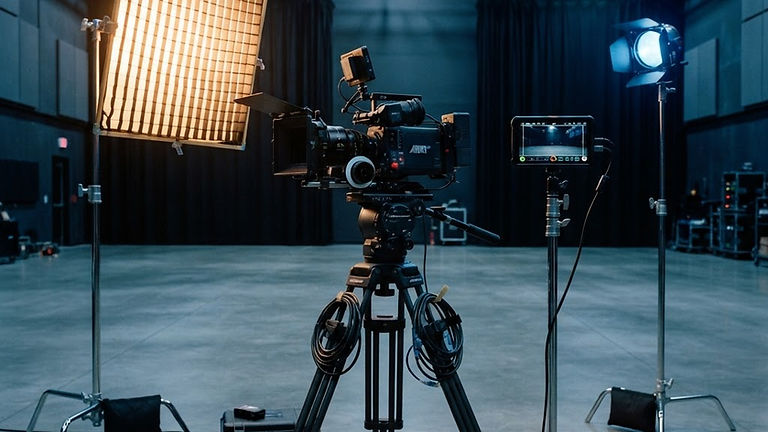
Protect the monitor. If nobody can see the frame, nobody can judge it. A single properly calibrated monitor on set changes the quality of the day more than an extra lens.
Budget for post. Color correction and sound work are where a good shoot becomes a good film. A modest grade that establishes consistency and a sound pass that removes room tone mismatches cost far less than a reshoot.


Your ad here
Reach the executives, lawyers and operators shaping the industry.
Advertise with usHow we assess it
Our review section treats cinematography as a first-class subject, with dedicated spotlights on camera, light, color and editing. When we praise a shot, we say what it does and why it works, because credit without specifics is just flattery.
The larger point is that craft coverage raises standards across the business. When a cinematographer's choices are described accurately and attributed properly, other producers see what is possible, and the audience learns what to look for.
The economics of a better image
Cinematography is often treated as an aesthetic luxury when it is actually a revenue decision. Work that looks considered earns a higher price per scene, sells for longer, and is easier to license because it holds up on a larger screen.
The costs are front-loaded and modest relative to the return: a couple of decent lenses, two or three controllable lights with diffusion, a monitor, and the time to plan. The savings are equally concrete: fewer reshoots, faster edits, and a catalogue that does not look dated within eighteen months.
The mistake to avoid is spending on the camera body and nothing else. A mid-range body with good glass, controlled light and a planned look will outperform a flagship body under a ceiling fixture every time.
Working with a cinematographer
If you hire one, hire for taste as much as technical skill. Ask to see work they shot in difficult conditions, and ask them to describe a shot they fought for and why. The answer tells you whether they think in terms of story or equipment.
Brief them with references, intent and constraints rather than instructions. Tell them what the film should feel like, how many days you have, and what the delivery format is. Then let them solve it.
On the day, give them the authority to protect the image. A director who overrides the camera department for speed will get speed and lose the film, which is a poor trade in a business where the image is the product.
Finally, credit them. A cinematographer whose work is named in a review, a credit block and a press release will recommend you to every producer they meet. That is how a studio builds a reputation worth more than any single release.
Practical takeaways
-
Build a reference frame for each setup and share it with the whole crew before the shoot.
-
Choose lenses and lighting for a reason, and write that reason into the shot list.
-
Plan coverage: master, mid, inserts. Editors need options, not volume.
-
Control color temperature at the source instead of fixing it in post.
-
Put a calibrated monitor on set so the frame can be judged live.
-
Credit the camera, lighting and color team by name wherever the work is published.
-
Read our craft reviews and the production resources before your next shoot.
Attribution: This story draws on the public sources linked at the end of the article.
About this byline
The XXXPress Editorial Desk
The Industry Business Desk covers the money side of the business: payment processing, insurance, lending, consolidation, licensing, retail economics and the operating decisions that decide whether a studio, club or platform survives its next downturn.
Reported and written by XXXPress editorial staff. Outside sources are attributed and linked; no sentence is copied from another publication.
Fact-checked by the desk before publication
Sources and further reading
Original reporting by The XXXPress. The links below are attributed to their publishers for verification and context; we do not host or republish their articles.
- Cal/OSHA: health and safety in the adult film industrydir.ca.gov
- Free Speech Coalition: industry resourcesfreespeechcoalition.com
- U.S. Copyright Office: copyright basicscopyright.gov
#cinematography #craft #lighting #production #reviews


Spotlight XXXPress: Steven Hirsch — The Visionary Who Helped Build Modern Adult Entertainment
Business & Finance · 8 min read