Your ad here
Reach the executives, lawyers and operators shaping the industry.
Advertise with usWhat separates a modern studio from a rented space: set design that reads on camera, a capture and post pipeline that does not break, and delivery infrastructure that protects the work.
Production value is a system, not a purchase. Studios that consistently look expensive usually have ordinary budgets and unusually good process: a set that was designed, a pipeline that was tested, and a team that knows what happens next.
That distinction matters more than ever. Cameras are cheaper, distribution is more crowded, and audiences can compare work instantly. The differentiator is no longer access to equipment. It is how deliberately the equipment, the space and the workflow are used.
The studio as a system
There are five layers to a working studio: design, capture, data, post and delivery. Every one of them can be a bottleneck, and a bottleneck in any layer shows up on screen.
Design determines what the frame contains. Capture determines how faithfully it is recorded. Data determines whether it survives. Post determines whether it feels finished. Delivery determines whether anyone can watch it reliably and whether the work is protected.
Operators who plan all five find that each layer gets cheaper, because problems are caught where they are still small.
Production design is the cheapest upgrade
A painted flat, two practical lamps and a coherent color palette will change the perceived budget of a film more than a new camera body. Production design is where modest money buys the largest visible return.
Design is also a safety and comfort tool. A dressed set with a place to sit, water within reach, a private changing area and a clear path to the door is a set where people can work well. Comfort is not a luxury; it is a performance condition.
Set design carries continuity value too. A recognisable room becomes a brand asset, the way a distinctive location does in any film culture.
The capture and post pipeline
Modern capture decisions are mostly about consistency: matching camera bodies, controlling color temperature at the source, and recording enough data to grade without artefacts. The goal is footage that cuts together without intervention.
Post is where studios win or lose efficiency. A shared project structure, a naming convention, proxy workflows for editing and a colour-managed export template turn a two-day edit into an afternoon. They also make it feasible to hire an editor, which is how a studio scales.
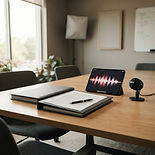
Sound deserves the same attention. Clean dialogue and consistent room tone are the fastest route to a film that feels professional, and the cheapest route is a treated corner and a decent microphone.
Data, backups and the boring miracle
Every studio has a version of the same story: the drive that failed the week after a shoot. The ones that survived had three copies, on two kinds of media, with one off-site.
Cloud storage is not a backup strategy on its own, and neither is a single raid array. The workable rule is the classic one: primary working copy, local backup, and an off-site copy that is verified, not assumed.
This is also a contractual issue. Agreeing who holds the masters, for how long, and in what format protects both the studio and the performers whose work it is.


Your ad here
Reach the executives, lawyers and operators shaping the industry.
Advertise with usDelivery, protection and platform risk
Delivery is where many productions leak value. Unwatermarked previews, shared link folders and a single platform dependency all create avoidable risk. Rights-managed delivery, expiring links and a documented licensing process are now standard practice for serious operators.
Studios that publish on their own infrastructure, alongside platform distribution, keep the customer relationship and the margin. Services built for adult merchants, from payment processors to hosting and CDN providers, exist precisely because the mainstream stack often declines the work.
Where the next advantage comes from
The next five years will reward studios that look like small film companies: designed sets, documented pipelines, credited crews, licensed catalogues and clean books. The technology will keep getting cheaper, which means process and taste become the differentiators.
Staffing for scale
A studio that stays small forever is a valid choice, and a studio that scales badly destroys itself in a single season. The difference is staffing.
The first hire should remove the founder's least valuable recurring task. For most owner-operators that is editing, bookkeeping or scheduling, in that order. The second hire should protect revenue: someone who can shoot consistently or handle client communication without the founder in the room.
Freelancers are cheaper than employees and slower to build a culture with. The practical middle ground is a small core of regular freelancers who know the pipeline, backed by clear documentation that lets a newcomer contribute on day one.
Documentation is the unglamorous multiplier. A one-page guide to the naming convention, the storage structure and the delivery format turns a two-hour onboarding into twenty minutes and prevents the version-control disasters that cost studios entire days.
The lighting and space budget
Space is the most under-priced line item in production. A room with controllable light and reasonable sound is worth more than a bigger room with windows you cannot block.
If you are choosing between rent and equipment, choose the room. Lights can be rented for a day; a bad acoustic environment cannot be fixed in post, and a set you can black out gives you any look you want.
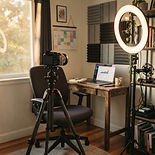
Practical additions in order of return: blackout curtains, a treatment on one wall, two or three lights with diffusion, a solid tripod, and a small monitor. That list costs less than a single lens and changes every frame you shoot afterwards.
Practical takeaways
-
Budget for set design before a new camera body; it is the most visible upgrade per dollar.
-
Standardise capture settings and project structure so footage cuts without intervention.
-
Use three copies of every master, on two media types, with one verified off-site.
-
Agree master-file custody and licensing in writing with every collaborator.
-
Deliver through expiring links, and keep your own storefront alongside platforms.
-
Credit your crew, and use the directory and jobs to find specialists in production.
Attribution: This story draws on the public sources linked at the end of the article.
About this byline
The XXXPress Editorial Desk
The XXXPress News Desk writes original reporting and context on the developments that move the adult entertainment business: regulation, payments, platform policy, workplace rules and the companies that serve the trade.
Reported and written by XXXPress editorial staff. Outside sources are attributed and linked; no sentence is copied from another publication.
Fact-checked by the desk before publication
Sources and further reading
Original reporting by The XXXPress. The links below are attributed to their publishers for verification and context; we do not host or republish their articles.
- Cal/OSHA: workplace safety for adult film productiondir.ca.gov
- CISA: cybersecurity resourcescisa.gov
- Free Speech Coalition: industry resourcesfreespeechcoalition.com
#studio #production design #technology #post-production #distribution


The XXXPress Top 100 Performers of 2026
Performers & Creators · 2 min read